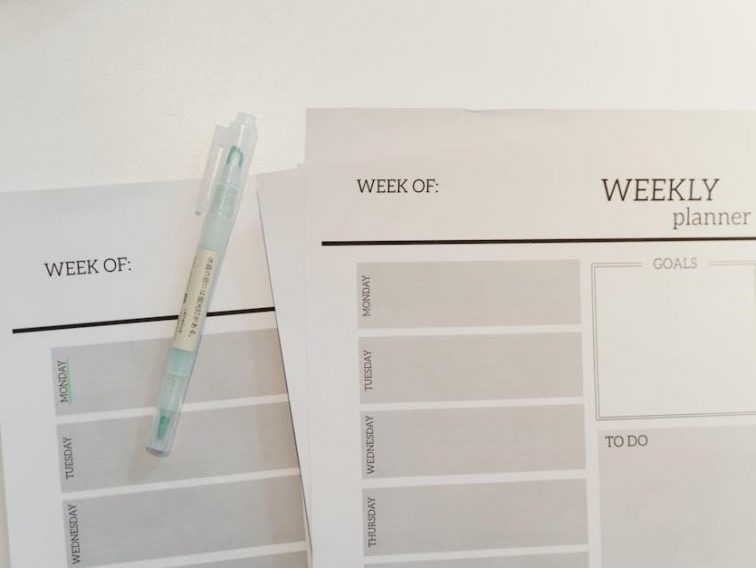
Weekly preschool lesson plans in PDF format offer educators a structured approach to early childhood education, aligning with international standards and age-appropriate curricula.
What is a Preschool Lesson Plan?
A preschool lesson plan is a detailed, organized roadmap guiding educators through learning experiences for young children, typically aged 2-5. It outlines specific learning objectives, activities, and assessment strategies designed to foster development across various domains – cognitive, social-emotional, physical, and creative. These plans, often available as weekly lesson plan PDF documents, ensure a cohesive and purposeful learning environment.
Effective plans consider individual child needs and learning styles, incorporating play-based learning and hands-on activities. They detail materials required, time allocation for each activity, and methods for evaluating progress. Utilizing a weekly lesson plan template allows for consistent structure while providing flexibility to adapt to emergent interests and unexpected learning opportunities. The goal is to create engaging and enriching experiences that support holistic child development, mirroring frameworks like Early Childhood Education standards.
Why Use a Weekly Format?
Employing a weekly format for preschool lesson plans, often distributed as a weekly lesson plan PDF, provides numerous benefits. It allows for thematic units, fostering deeper exploration of concepts over several days. This structure promotes continuity and builds upon previously learned skills, enhancing retention. A weekly overview simplifies planning and preparation for educators, ensuring all learning domains are addressed consistently.
Furthermore, a weekly plan facilitates communication with parents, offering a clear understanding of the curriculum and their child’s learning journey. It allows for adjustments based on observed student needs and emergent interests, maintaining flexibility within a structured framework. Utilizing a weekly lesson plan template streamlines this process, offering a readily adaptable and organized approach to early childhood education, aligning with international preschool standards.
Key Components of a Preschool Lesson Plan
Preschool lesson plans, often in PDF format, require clear learning objectives, detailed assessment methods, and a comprehensive list of necessary materials and resources.
Learning Objectives & Domains
Clearly defined learning objectives are crucial within a weekly preschool lesson plan PDF. These objectives should encompass various developmental domains, mirroring frameworks like Early Childhood Education. Key domains include cognitive development – fostering problem-solving and critical thinking; social-emotional development – nurturing empathy and self-regulation; physical development – enhancing gross and fine motor skills; and language development – expanding vocabulary and communication abilities.
Objectives should be SMART: Specific, Measurable, Achievable, Relevant, and Time-bound. For example, instead of “children will learn about colors,” a SMART objective would be “children will be able to identify and name three primary colors by the end of the week.” Aligning objectives with age groups (toddler, preschool, pre-kindergarten) ensures appropriate challenges and supports successful learning experiences, often detailed within the PDF lesson plan.
Assessment Methods
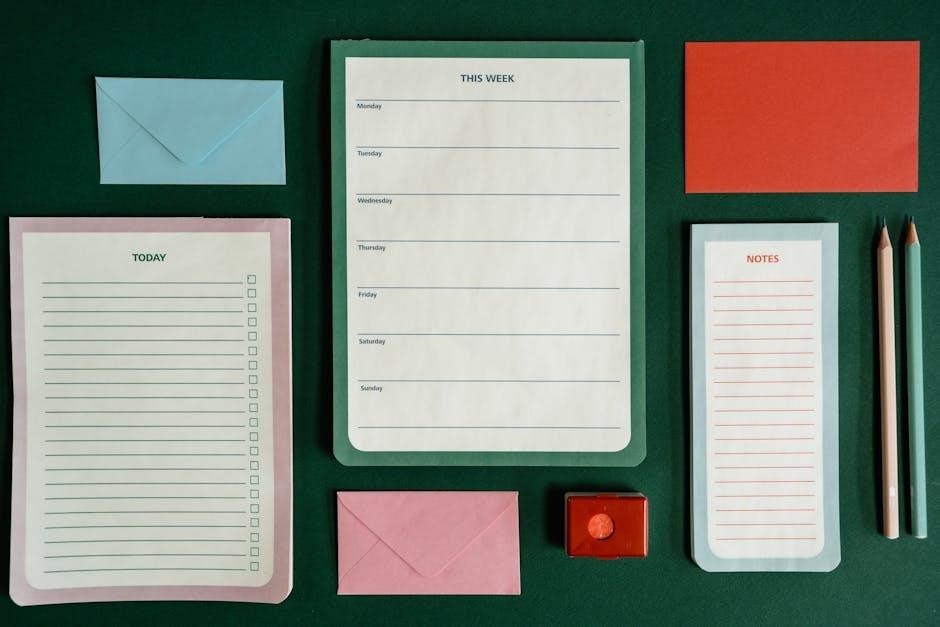
Effective assessment methods are integral to a comprehensive weekly preschool lesson plan PDF. These shouldn’t solely rely on formal testing, but rather embrace ongoing, observational techniques. Anecdotal records – brief notes documenting children’s behaviors and skills – provide valuable insights. Checklists can track progress against specific learning objectives, easily incorporated into the PDF.
Work sample analysis, such as reviewing artwork or writing samples, demonstrates understanding. Portfolios, showcasing a child’s work over time, offer a holistic view of development. Remember, assessment informs instruction; data gathered helps tailor future lessons within the weekly plan. The goal isn’t grading, but understanding each child’s needs and adjusting the PDF lesson plan accordingly to support their growth across all developmental domains.
Materials & Resources
A well-defined Materials & Resources section is crucial within a weekly preschool lesson plan PDF. This details everything needed for each activity, ensuring smooth implementation. Consider readily available items like crayons, paint, paper, and building blocks. Include specific books relevant to the theme, and list any printable resources directly linked or embedded within the PDF itself.
Don’t forget to specify technology requirements – access to a tablet, projector, or specific software. Outline any sensory materials like playdough or sand. A clear list minimizes preparation time and prevents mid-lesson scrambling. The PDF should also indicate where to source materials, whether from the classroom, parent contributions, or online retailers, supporting a resourceful and engaging learning environment.

Age Group Considerations (2-5 Years)
Weekly preschool lesson plan PDFs must be tailored to developmental stages, recognizing distinctions between toddlers (1-2), preschoolers (3-4), and pre-kindergarteners (4-5).
Toddler Lesson Plan (1-2 Years)
Weekly lesson plan PDFs for toddlers (1-2 years) should prioritize sensory exploration and practical life skills. Activities must be short, repetitive, and focused on developing gross and fine motor skills. Think simple songs, stacking blocks, and exploring textures.
A sample weekly theme could be “Colors.” Daily activities might include color sorting, painting with fingers, and reading board books featuring vibrant illustrations. Emphasis should be on language development through labeling objects and encouraging vocalization.
PDF templates for this age group should include sections for observing individual progress in areas like crawling, walking, and grasping. Safety is paramount; all materials must be non-toxic and age-appropriate. Parent communication sections within the PDF are crucial for sharing observations and suggesting home-based activities.
Preschool Lesson Plan (3-4 Years)
Weekly preschool lesson plan PDFs for 3-4 year olds should build upon toddler skills, introducing pre-literacy and pre-math concepts. Themes like “Community Helpers” or “Animals” provide engaging contexts for learning. Daily activities should include circle time with stories, simple art projects, and structured play.
A PDF template should incorporate learning objectives across literacy (letter recognition), math (counting to 10), and social-emotional development (sharing, taking turns). Activities like building with blocks, dramatic play, and simple puzzles are essential.
Assessment sections within the PDF should focus on observational notes regarding a child’s ability to follow directions, participate in group activities, and demonstrate emerging skills. Parent communication sections should detail weekly learning goals and suggest extension activities for home.
Pre-Kindergarten Lesson Plan (4-5 Years)
Weekly lesson plan PDFs designed for 4-5 year olds (pre-kindergarten) should focus on school readiness skills. These plans build on preschool foundations, emphasizing pre-writing skills, number recognition, and early scientific exploration. Themes like “Space” or “Ocean Life” can spark curiosity.

A well-structured PDF template will include phonological awareness activities, such as rhyming and initial sound identification. Math activities should involve counting, sorting, and simple addition/subtraction. Social-emotional learning should address conflict resolution and empathy.
Assessment within the PDF should include checklists for tracking letter/number recognition, and observational notes on social interactions. The plan should also detail opportunities for child-led exploration and creative expression, fostering independence and a love of learning.

Core Curriculum Areas
Weekly preschool lesson plan PDFs integrate literacy, math, science, art, and social-emotional development, fostering holistic growth and preparing children for kindergarten success.
Literacy & Language Development
Weekly preschool lesson plan PDFs dedicated to literacy and language development should prioritize foundational skills. These plans commonly incorporate read-alouds featuring diverse characters and engaging storylines, encouraging a love for books from an early age.
Activities might include phonological awareness exercises – rhyming, alliteration, and syllable segmentation – to build pre-reading skills. Explicit instruction in letter recognition and sounds, alongside opportunities for emergent writing (scribbling, drawing, and invented spelling), are crucial.
Vocabulary enrichment is also key, introducing new words through thematic units and daily conversations. Plans should also include opportunities for storytelling, dramatic play, and songs, fostering expressive language skills and communication abilities. PDF formats allow for easy integration of printable worksheets and visual aids to support learning.
Math & Number Sense
Weekly preschool lesson plan PDFs focusing on math and number sense should build a strong foundation for future mathematical understanding. These plans typically begin with concrete experiences, utilizing manipulatives like blocks, counters, and shapes to introduce basic concepts.
Activities should encompass counting (rote counting and one-to-one correspondence), number recognition (identifying numerals 1-10 and beyond), and shape identification. Introducing simple patterns and sorting activities helps develop logical thinking skills.
Concepts like “more than,” “less than,” and “equal to” can be explored through playful comparisons. PDF lesson plans facilitate the inclusion of printable number cards, shape templates, and counting worksheets. Integrating math into daily routines – counting snacks, measuring ingredients – reinforces learning in a practical context.
Science & Exploration
Weekly preschool lesson plan PDFs dedicated to science and exploration foster curiosity and introduce fundamental scientific concepts. These plans should emphasize hands-on activities and observation, encouraging children to ask questions about the world around them;
Themes can include exploring different textures, observing plant growth, investigating simple weather patterns, or learning about animals and their habitats. Simple experiments, like making a volcano or creating a rain cloud in a jar, are highly engaging.
PDF formats allow for the easy inclusion of printable observation sheets, coloring pages depicting scientific concepts, and instructions for simple experiments. Encourage children to make predictions, record observations, and draw conclusions, laying the groundwork for scientific thinking and inquiry-based learning.
Art & Creative Expression
Weekly preschool lesson plan PDFs focusing on art and creative expression are vital for developing imagination and fine motor skills. These plans should incorporate a variety of artistic mediums, moving beyond traditional painting and drawing to include collage, sculpting with playdough, and exploring different textures.
Themes can revolve around colors, shapes, nature, or storytelling. Activities should be open-ended, allowing children to express themselves freely and experiment with different techniques; Consider incorporating music and movement into art projects, fostering a multi-sensory experience.
PDF templates can conveniently include printable coloring pages, templates for crafts, and visual examples of finished projects. Encourage process-oriented art, emphasizing the joy of creation rather than the final product, and celebrate each child’s unique artistic voice.
Social-Emotional Development
Weekly preschool lesson plan PDFs dedicated to social-emotional development are crucial for building foundational life skills. These plans should prioritize activities that foster empathy, self-awareness, and positive relationships. Role-playing scenarios, story discussions focusing on feelings, and cooperative games are excellent inclusions.
Themes might center around sharing, taking turns, resolving conflicts peacefully, and identifying emotions in oneself and others. PDF templates can provide printable emotion cards, social stories addressing common challenges, and prompts for circle time discussions.
Creating a “feelings corner” within the classroom, referenced in the lesson plan, can offer a safe space for children to express and regulate their emotions. Remember to model positive social-emotional behaviors consistently throughout the day.
Finding & Utilizing PDF Templates
Numerous online resources offer free and customizable weekly preschool lesson plan PDFs, streamlining planning and providing structure for educators and caregivers.
Free Printable Weekly Lesson Plan Templates
Accessing free, printable weekly lesson plan templates for preschool is remarkably easy. A quick online search reveals a wealth of options, often available in PDF format for convenient downloading and printing. These templates typically include sections for daily activities, learning objectives aligned with core curriculum areas – literacy, math, science, and art – and space for noting materials needed.
Many educational websites and teacher resource platforms offer these templates, catering to various themes and age groups within the preschool range (2-5 years). Utilizing these resources saves valuable time and ensures a well-rounded, structured learning experience for young children. Look for templates that emphasize play-based learning and cater to different learning styles. Remember to preview and adapt the template to best suit your specific classroom needs and the children you serve.
Customizable PDF Editors
While free printable templates are excellent, customizable PDF editors offer greater flexibility. Several software options allow direct editing of PDF lesson plans, enabling teachers to tailor content precisely to their students’ needs. Programs like Adobe Acrobat Pro, PDFelement, and Smallpdf provide tools to add text, images, and interactive elements.
This customization is invaluable for differentiating instruction and accommodating diverse learning styles. You can easily adjust learning objectives, modify activity descriptions, and incorporate specific student names or interests. Furthermore, these editors facilitate collaboration; teachers can share and co-edit lesson plans seamlessly. Utilizing a PDF editor ensures your weekly preschool plans are dynamic, responsive, and perfectly aligned with your teaching philosophy and classroom environment.
Benefits of Using PDF Format
Employing PDF format for weekly preschool lesson plans offers numerous advantages. PDFs ensure consistent formatting across all devices, preventing unwanted alterations during sharing or printing. This consistency is crucial for clear communication with assistants, parents, and administrators. PDFs are also highly portable and easily shareable via email or cloud storage, facilitating collaboration and accessibility.
Moreover, PDFs maintain the visual integrity of your plans, preserving embedded images and fonts. They are relatively secure, preventing unauthorized modifications. The format’s universal compatibility means recipients don’t require specialized software to view the plans. Ultimately, utilizing PDFs streamlines the lesson planning process, promoting organization, efficiency, and professional presentation of your preschool curriculum.

Montessori-Inspired Lesson Planning
Montessori lesson plans emphasize child-led exploration, practical life skills, and sensorial learning, fostering independence and a prepared environment for optimal growth.
Practical Life Activities
Practical life activities are foundational in Montessori education, and seamlessly integrate into a weekly preschool lesson plan PDF. These exercises focus on developing independence, coordination, concentration, and a sense of order. Examples include pouring, spooning, buttoning, zipping, and polishing.
A well-structured weekly plan will dedicate specific time slots for these activities, offering children choices and opportunities to master everyday skills. The PDF format allows for easy visual representation of materials needed and step-by-step instructions for teachers. Consider incorporating activities like flower arranging, food preparation (simple tasks), and table setting.

These aren’t just “busy work”; they build self-esteem and prepare children for more complex learning experiences. Observation is key – noting which activities children gravitate towards and providing support as needed. The goal is to foster a love of learning through purposeful work.
Sensorial Exploration
Sensorial exploration is a cornerstone of Montessori and a vital component within a weekly preschool lesson plan PDF. These activities refine the five senses – sight, sound, touch, smell, and taste – through carefully designed materials. Think color sorting, sound cylinders, texture tablets, and scent jars.
A PDF lesson plan allows for clear documentation of material preparation and presentation. Each week, introduce new sensorial experiences, building upon previously learned concepts. Observation is crucial; note how children interact with the materials and adjust activities accordingly.
These exercises aren’t about labeling; they’re about developing the ability to discriminate and categorize. This foundational skill supports later learning in math, language, and science. The PDF format facilitates easy tracking of individual progress and adaptation of the curriculum to meet diverse needs.

International Preschool Standards
Weekly preschool lesson plan PDFs should reflect global early childhood education frameworks, emphasizing language development and aligning with recognized international benchmarks.
Early Childhood Education Frameworks
Weekly preschool lesson plan PDFs benefit greatly from alignment with established early childhood education frameworks. These frameworks, such as those emphasizing play-based learning and child-centered approaches, provide a solid foundation for curriculum development.
Consider incorporating principles from international standards, ensuring a holistic approach to development. Frameworks often address key domains like literacy, math, social-emotional skills, and physical development; Utilizing these guidelines ensures lesson plans are developmentally appropriate and support diverse learning needs.
PDF formats allow for easy distribution and consistent implementation of these framework-aligned plans. Resources from Eleanor Reynolds’ work on early childhood education guidance can further inform lesson planning, promoting best practices and fostering positive learning outcomes for young children.
Language Development in Early Years
Weekly preschool lesson plan PDFs should prioritize language development, a crucial skill in early childhood. Plans should incorporate activities that foster vocabulary expansion, phonological awareness, and expressive language skills. Consider incorporating storytelling, rhyming games, and opportunities for children to engage in conversations.
Resources like Li Yu Ming’s work on child language development offer valuable insights for crafting effective language-focused lessons. Activities should be age-appropriate, catering to the varying language abilities of toddlers (1-2 years), preschoolers (3-4 years), and pre-kindergarteners (4-5 years).
PDF format allows for easy inclusion of visual aids and printable materials to support language learning. Consistent implementation of these plans, guided by established frameworks, will significantly contribute to children’s communication skills;